

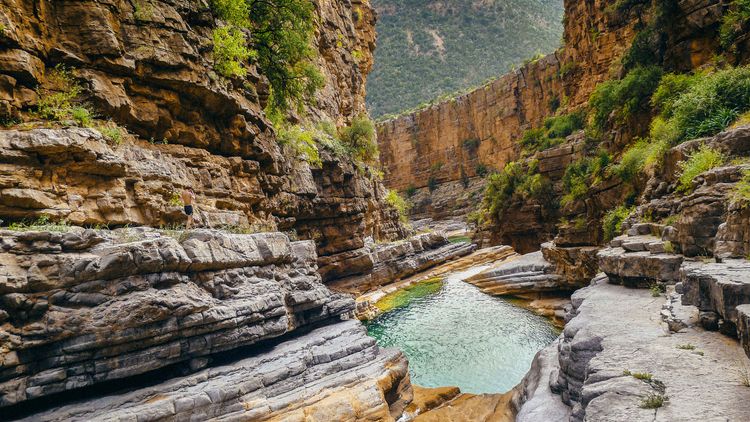






Forests, mountains, coastlines — nature is not just a backdrop for corporate seminars. It is a learning environment in its own right, fostering concentration, creativity, risk-taking, and social bonding in ways that air-conditioned conference rooms simply cannot replicate.
Ready to Create Unforgettable Team Experiences?
Discover how we can help you plan retreats that your teams will truly remember.
The Science Behind Learning in Nature
🧠 Key figure
A University of Michigan study shows that 90 minutes of walking in nature reduces activity in the brain's rumination zone by 45 %. More serene participants learn better and collaborate more.
- 🌿 Restorative attention — Nature restores attentional resources depleted by digital environments. A group arriving after a forest walk is structurally more receptive than one coming from a Zoom meeting.
- 💡 Enhanced creativity — Studies (Stanford, 2014) show that walking boosts creativity by 81 % — an effect that persists even after returning indoors.
- 🤝 Accelerated trust — Facing a physical challenge together (climbing, river crossing, orienteering) builds interpersonal trust 3–5 times faster than a standard work session.
- 📵 Beneficial disconnection — Without notifications or screens, participants truly listen to each other — a rare luxury in a professional context.
The Most Impactful Outdoor Training Formats
🌲 Learning by doing in the forest:
Skills workshops (leadership, communication, stress management) in the forest using natural metaphors — building a shelter = organising a project, crossing an obstacle = managing a conflict.
🏔️ Mindfulness seminar in the mountains:
Combination of hiking, mindfulness meditation, and short work sessions at a summit or mountain hut. Particularly effective for teams under pressure or experiencing burnout.
🌊 Survival and leadership programme:
Adapted from military leadership programmes: navigation, first aid, managing uncertainty in real context. Strong impact on decision-making and resilience.
🌱 Permaculture and collective intelligence:
Working in a permaculture garden, learning ecosystem principles and transposing them to organisational design. A powerful metaphor for teams in transformation.
How to Design an Effective Outdoor Training Programme
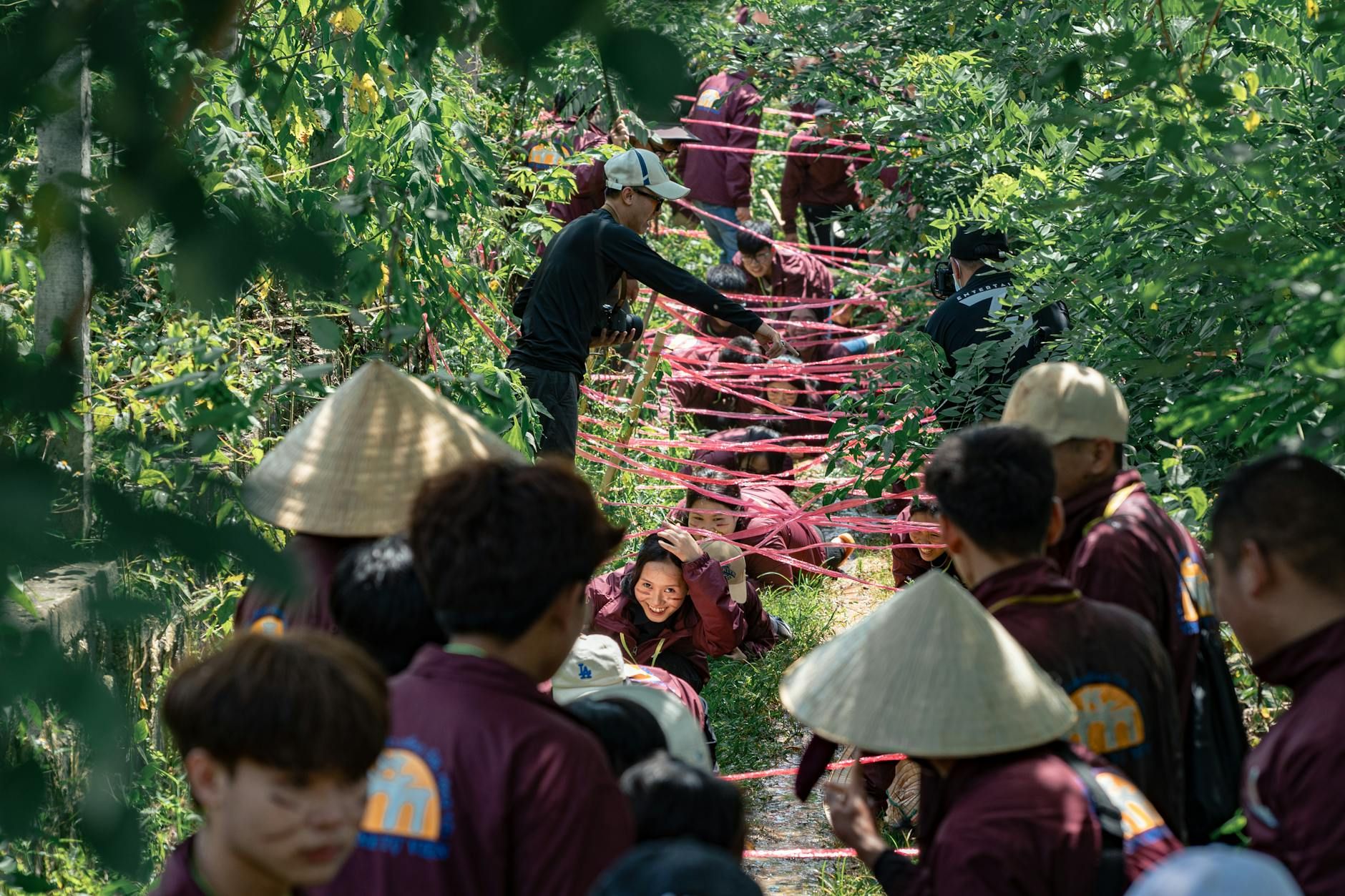
- 🎯 Pedagogical objective first — Nature is not an end in itself — it’s a medium. Define the skill to develop first, then choose the most appropriate outdoor activity.
- 🧑🏫 Specialist facilitator — A good outdoor trainer combines experiential learning expertise and terrain knowledge. Not a sports instructor — an educator.
- 🔄 Structured debrief — The nature experience must be followed by structured reflection time — individual first, then small group, then collective. This is where real learning happens.
- 🌤️ Mandatory weather plan — No serious outdoor training is organised without a weather fallback plan. Unpredictable weather is a pedagogical opportunity — dangerous weather is a risk to avoid.
❓ Frequently Asked Questions
Is outdoor training suitable for urban profiles who dislike sport?
Yes, with well-calibrated activities. Nature doesn't mean intense physical effort — a strategic reflection session in a meadow, a forest walk, or a gardening workshop are accessible to all.
How do you handle reluctance from some delegates about the outdoor format?
Communicate upfront that this is not a competitive sport activity. Offer alternatives for those with limited mobility. Emphasise that the habit of meeting rooms is a learned discomfort, not natural.
What is the budget for quality outdoor training?
Between £150 and £400/delegate for a full day of outdoor training with an experienced facilitator. Nature accommodation adds £80–£200/person/night.
Ready to organize your next retreat?
Discover how we can help you create memorable experiences for your teams.

Create lasting memories with your team in inspiring locations