


A successful convention relies on well-structured pacing. Plenary sessions, workshops, networking, gala: how to orchestrate these sequences to maximise engagement?
Ready to Create Unforgettable Team Experiences?
Discover how we can help you plan retreats that your teams will truly remember.
A successful corporate convention is fundamentally a question of pacing. Participants alternate between high-intensity sequences (plenary sessions, decision-making) and decompression moments (breaks, networking, socialising). Programme construction is an art that blends pedagogy, emotion and logistics. Here's how to orchestrate the four fundamental building blocks: plenary, breakouts, networking and gala.
The Plenary: The Founding Act
The plenary is the moment when all participants receive the same message at the same time. It's the founding act of any convention: it creates unity, sets strategic direction, legitimises the collective investment in the event. Its construction follows several immutable laws.
Duration: 2 to 3 hours maximum. Beyond this, attention declines and participants leave exhausted or frustrated. If content is dense, split into two half-plenaries separated by a 30-minute break.
Typical structure for a 2.5-hour plenary: strong opening (5 to 10 min) — film, musical sequence or stage device that creates emotion; management address (20 to 30 min max) — review, direction, call to action; field testimonials (15 min) — 2 to 3 employees, authentic, unscripted; external keynote (30 to 45 min) — inspiring outside perspective; interactive sequence (15 to 20 min) — live voting, Q&A via app; closing (10 min) — strong message, applause, momentum.
What kills a plenary: overloaded PowerPoint presentations, speakers reading their notes, presentations longer than 30 minutes without interaction, crackling microphones, poorly heated or overheated rooms.
Breakouts: Collective Intelligence in Action
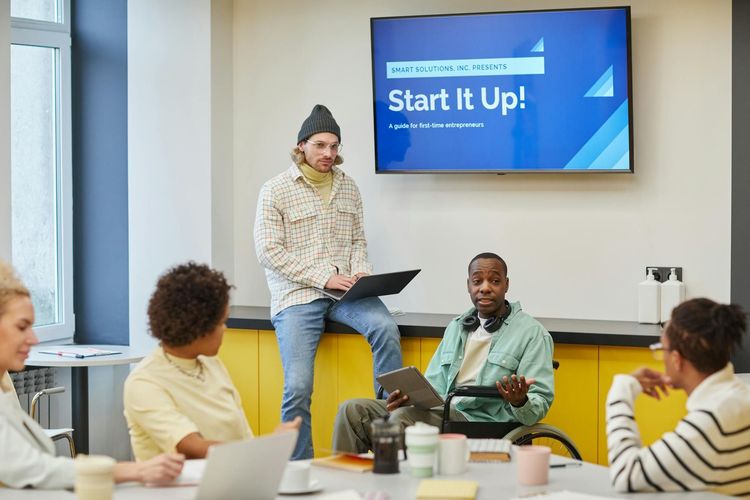
Sub-group workshops (breakouts) transform participants from passive listeners into active players. They enable deeper exploration of specific subjects, create cross-functional interactions, and generate collective deliverables. Key construction principles:
Group sizes: between 8 and 25 people depending on format (roundtable, creative workshop, working group). Beyond 30 participants per breakout, group dynamics deteriorate. For 200 participants, plan 8 to 10 simultaneous groups in as many rooms.
Possible formats: world café (group rotation across several thematic tables), design thinking workshop, creative challenge, practical training, role-play, co-construction workshop. The format must match the pedagogical objective and the energy level at that point in the day.
Recommended duration: 1.5 to 2 hours. Under 1 hour, groups don't have time to go in-depth. Beyond 2.5 hours, fatigue sets in and output quality diminishes. Include a feedback session (10 to 15 min) to showcase group work.
Networking: Don't Leave It to Chance
Networking is often treated as a "free" moment between two programmed sequences. This is a mistake. The most valued encounters happen when the context is created for them. Some effective approaches:
- Thematic lunch tables (with conversation topics placed on tables): break up pre-existing group automatisms
- Matching application: event app suggests 3 participants to meet based on profiles and objectives
- Structured speed networking (5 min per pair on rotation): intense but effective for smaller formats
- Demo or exhibition stands: create conversation opportunities without formalism
- Shared physical activity: walking, yoga, morning running — informal context conducive to authentic exchanges
The Gala Evening: Emotion and Celebration
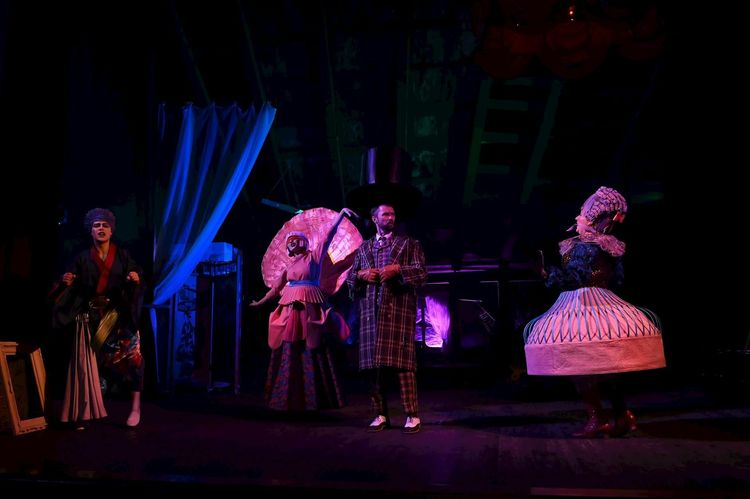
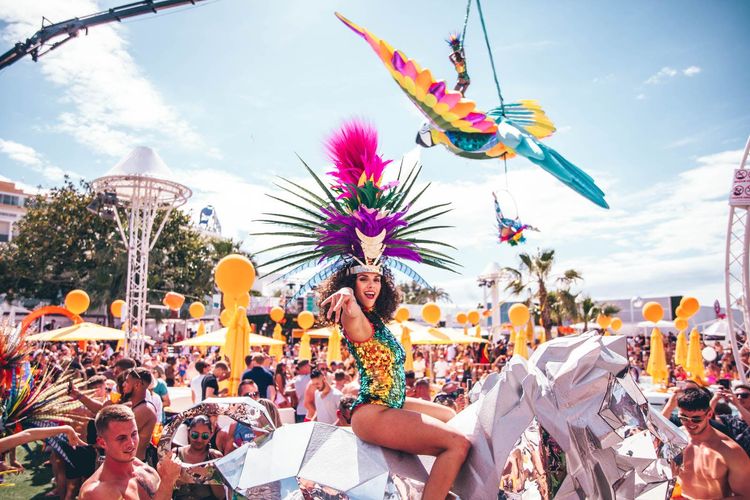
The gala evening is the strong emotional moment of the convention. It celebrates successes, rewards the best performers, and creates lasting shared memories. Its success relies on several fundamental elements:
The venue: different from the conference space. The spatial break signals the change of register — transitioning from work to celebration. Ideally in an outdoor space (park, terrace) in season, or in a different space from the daytime venue.
The sequence: reception cocktail (45 to 60 min, standing, live music or discrete DJ), seated dinner (round or square tables — not theatre-style), awards ceremony (30 min maximum, well-scripted), main entertainment (show, concert, DJ), optional afterparty.
The awards ceremony: showcases teams, creates collective emotion, gives meaning to annual efforts. It shouldn't last more than 30 to 40 minutes and must be carefully prepared (winner presentation videos, personalised trophies, short and sincere speeches).
Temporal Orchestration: A 2-Day Example
Day 1: Welcome/check-in (14:00–17:00) — Welcome cocktail (17:00–19:00) — Strategic plenary (19:00–21:00) — Gala dinner (21:00–00:00)
Day 2: Networking breakfast (08:00–09:00) — Thematic plenary (09:00–12:00) — Thematic table lunch (12:00–14:00) — Workshop breakouts (14:00–17:00) — Plenary feedback and closing (17:00–18:30) — Closing cocktail (18:30–20:00) — Departures
FAQ — Plenary, Breakouts, Networking, Gala Programme
How long should a corporate plenary last?
Between 2 and 3 hours maximum. Beyond this, attention wanes. Divide dense content into two half-plenaries separated by a break if necessary.
How many breakout workshops should be planned for 200 participants?
8 to 10 groups of 20 to 25 people simultaneously. Plan as many rooms as groups, and one facilitator per group if the format requires it.
Is a gala dinner always necessary in a convention?
No. For short formats (single day), a cocktail reception suffices. A full gala with seated dinner and entertainment is mainly justified for residential events of 2 nights or major annual conventions.
Ready to organize your next retreat?
Discover how we can help you create memorable experiences for your teams.

Create lasting memories with your team in inspiring locations