





Full remote work has transformed how companies operate—but it also brings a unique challenge: how do you physically gather teams that no longer share an office? The annual or quarterly corporate retreat is now the main—sometimes only—opportunity for real in-person connection. This guide explains how to organise it for maximum impact on team cohesion, culture, and collective performance.
Ready to Create Unforgettable Team Experiences?
Discover how we can help you plan retreats that your teams will truly remember.
The Challenge for Fully Remote Companies in 2026
Fully remote companies face a paradox: their teams are often more productive individually than those working in person (thanks to flexibility, autonomy, and no commuting), but they naturally develop less sense of belonging, mutual trust, and shared culture. Remote work can unintentionally isolate. According to Gallup (2025), fully remote employees show engagement scores 17% lower on average than hybrid teams who meet in person at least once a quarter. This alone justifies investing in regular corporate retreats.
Why In-Person Corporate Retreats Are Irreplaceable
In-person meetings create what sociologists call shared physical presence—a unique neurological state that can’t be replicated by Zoom or Teams. Informal coffee chats, body language, shared meals, and group activities all activate trust and empathy circuits that screens can’t trigger. For fully remote teams, every in-person corporate retreat is a chance to recharge the relational capital that sustains the team in the months ahead.
Companies that organise quarterly or semi-annual in-person retreats consistently see improved digital communication in the following weeks: fewer misunderstandings, more proactivity, and better listening in video meetings.
How Often and How Long Should Remote Teams Meet?
The ideal frequency depends on team size and maturity:
- Teams of 5 to 20 people: ideally 3 to 4 gatherings per year—a major 2-3 day residential retreat plus 2 or 3 one-day micro-events.
- Teams of 20 to 80 people: 2 major retreats per year (1 kickoff at the start of the year + 1 strategic retreat mid-year) plus a few subgroup events.
- Companies of 80 to 300 people: 1 large annual convention plus quarterly departmental retreats.
Golden rule: it’s better to have 3 days every 4 months than one week once a year. Regularity builds habit and ritual, which are the real glue of a distributed team culture.
How to Choose the Right Venue for a Remote Team
For geographically dispersed teams, choosing the venue is first and foremost a logistical decision. Key criteria:
- Accessibility from multiple hubs: choose cities with a major international airport or high-speed train station to minimise travel time for all participants.
- A neutral location: avoid holding the retreat in the city where the CEO or founders are based—others may feel like visitors. Opt for an inspiring, neutral destination.
- On-site accommodation: for remote teams, a residential venue (everyone stays on-site) is preferable to a city hotel with participants scattered in different hotels.
- Rich informal spaces: gardens, terraces, common rooms, shared kitchens—informal moments are as important as work sessions.
Ready to Create Unforgettable Team Experiences?
Discover how we can help you plan retreats that your teams will truly remember.
Top Destinations for Fully Remote Teams
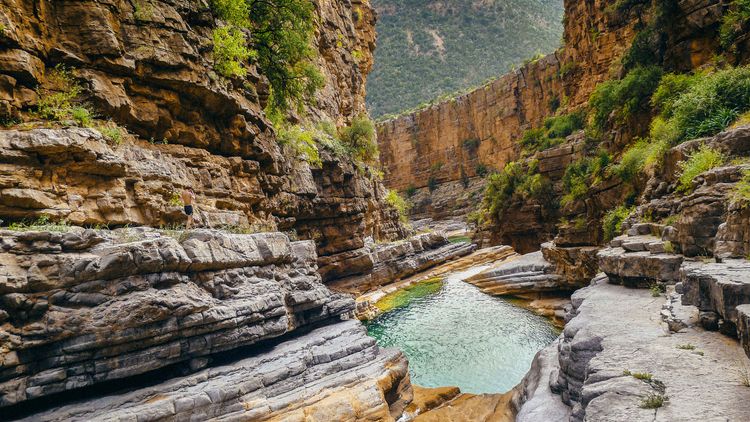
- Marrakech: total change of scenery, private riads available, direct flights from across Europe.
- Lisbon / Porto: European tech hub, excellent connectivity, coworking spaces and private mansions available.
- Barcelona: digital hub, great weather, many villas and fincas on the Costa Dorada.
- Île de Ré or Ile d’Oléron: for French teams, coastal getaways accessible by car or train.
- Bali / Thailand: ideal for teams with many Asian members or for immersive retreats longer than a week.
Sample Programme for a Remote Team Retreat (3 Days)
Day 1 — Reconnection: Staggered arrivals, informal lunch, light icebreaker activity (quiz about colleagues outside of work), welcome dinner.
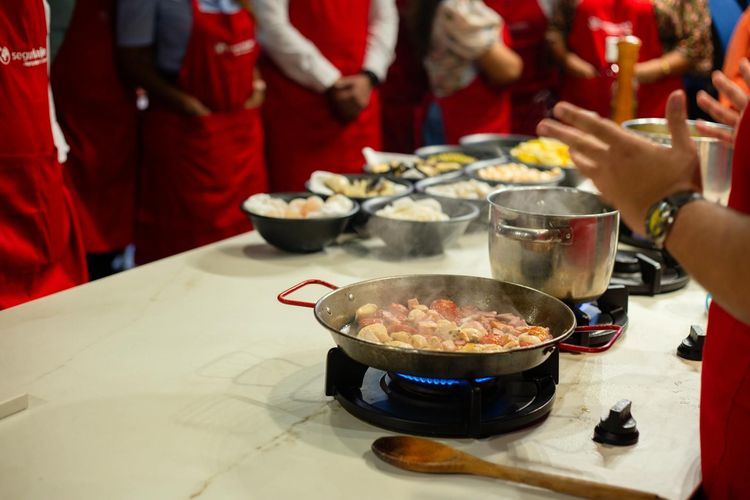
Day 2 — Work and Cohesion: Morning → structured work session (30% plenary, 70% participatory workshops). Afternoon → outdoor team building or creative workshop. Evening → gala dinner with awards ceremony.
Day 3 — Decisions and Commitments: Morning → debriefs, decision-making, collective commitments. Lunch → friendly closing meal. Afternoon → departures.
Organise Your Remote Team Retreat with Seminaire.com
Seminaire.com specialises in organising corporate retreats for fully remote and distributed teams. We select venues accessible from multiple hubs, manage logistics for participants coming from 10 different cities, and design programmes that maximise human connection in the limited time spent together. Submit your brief on this page—our team will respond within 24 hours.
Ready to organize your next retreat?
Discover how we can help you create memorable experiences for your teams.

Create lasting memories with your team in inspiring locations