







Organising a genuinely inclusive seminar goes far beyond adding a vegan option and checking wheelchair access. In 2026, the most progressive organisations integrate D&I into every dimension of the event: programme design, venue selection, facilitation, catering, communications, and celebration rituals. This guide gives you the tools to transform your next seminar into a unifying experience for 100 % of attendees.
Ready to Create Unforgettable Team Experiences?
Discover how we can help you plan retreats that your teams will truly remember.
Why Is Inclusion at Seminars a Strategic Issue?
📊 The figure to consider
According to Deloitte (2023), 39 % of employees from minority backgrounds report having experienced a moment of exclusion at a corporate event.
- ♿ Physical accessibility — Wheelchair users, visually impaired, hard of hearing: every delegate must be able to fully participate in all activities.
- 🌍 Cultural diversity — International teams: languages, cultural codes, dietary and religious requirements, different representations.
- 🏳️🌈 LGBTQ+ inclusion — Gender binaries in forms, accommodation, facilities, communications — every detail matters.
- 🧠 Neurodiversity — Autistic, dyslexic, ADHD colleagues: formats that respect different modes of information processing.
- 👶 Parenthood — Delegates with parental constraints: scheduling, breastfeeding, on-site childcare if needed.
D&I Checklist for Your Seminar Planning
Before the event — design phase:
- ✅ Send a specific needs form to all attendees (mobility, diet, health, religion, personal constraints) — anonymous and optional.
- ✅ Verify full wheelchair accessibility: entrances, rooms, bathrooms, accommodation, activities.
- ✅ Offer alternative accommodation options for those who do not wish to share a room.
- ✅ Provide quiet/retreat spaces (quiet room, prayer room, nursing room).
- ✅ Ensure the programme does not force participation in potentially exclusionary activities (alcohol, physical contact, intense sport).
During the event:
- ✅ Use inclusive language and pronouns in all communications and presentations.
- ✅ Vary expression formats: oral, written, visual, individual or collective.
- ✅ Appoint a visible, available inclusion contact person.
- ✅ Implement equitable recognition rituals: contributions from all should be valued, not just those from extroverted personalities.
Inclusive Catering: Far Beyond the Vegan Option

🍽️ Worth knowing
In the UK, approximately 14 % of adults follow a restrictive diet for medical, religious, or ethical reasons. In international teams, this figure is often higher.
- 🥗 Vegan and vegetarian options — Not just a side salad: complete, flavourful dishes presented with equal care to non-vegan options.
- ☪️ Halal and kosher options — Clearly identified, prepared separately to respect ritual requirements.
- 🌾 Food allergies — Gluten, lactose, tree nuts — clear labelling on every dish, informed catering staff.
- 🚫 Alcohol-free alternatives — Festive non-alcoholic options during receptions and group meals, not just water.
- 🌙 Ramadan — If colleagues are fasting, adapt the timing of collective meals accordingly.
Inclusive Activities: Formats Accessible to All
The golden rule: no activity should be compulsory if it risks excluding any delegate for physical, religious, cultural, or personal reasons.
Particularly inclusive formats:
- 🎨 Creative workshops: mural painting, illustration, sculpture — accessible regardless of mobility or cultural background.
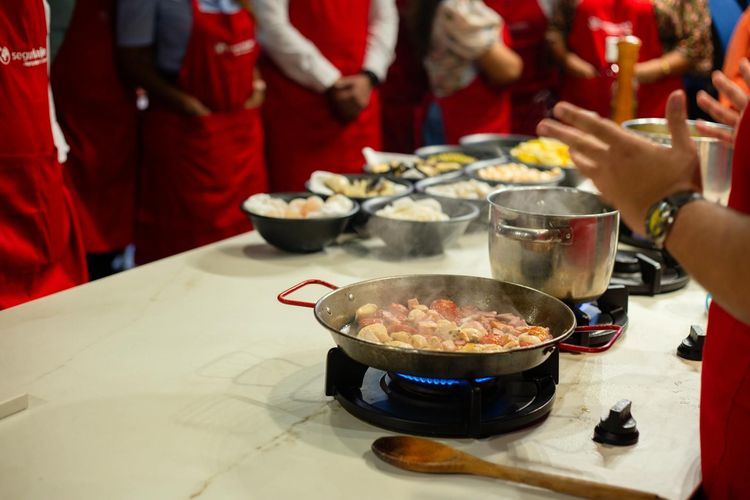
- 🍳 Intercultural cooking workshop: each participant brings a recipe from their culture. Cohesion + discovery + representation.
- 🧩 Adapted escape game: varied roles (investigator, analyst, communicator) allowing each person to contribute according to their strengths.
- 🎵 Collective music workshop: percussion, choral singing, composition — universal and accessible.
Find team building activities designed for diverse teams, including specialists in inclusive and multicultural formats.
❓ Frequently Asked Questions
How do you address specific needs without making delegates uncomfortable?
Send an anonymous, optional form well in advance (4–6 weeks). Frame it positively: 'Share your preferences so we can personalise your experience' rather than as a declaration of disability or difference.
Does inclusion require a specific budget?
Mostly not — the essentials cost nothing: it is about design choices and attention. Real additional costs (specific physical accessibility, interpreters) are often marginal relative to the overall budget.
How do you measure the success of an inclusive seminar?
Via a post-event satisfaction survey including specific questions on feelings of inclusion, respect, and belonging. Participation rates across all activities are also a key indicator.
Ready to Create Unforgettable Team Experiences?
Discover how we can help you plan retreats that your teams will truly remember.
Ready to organize your next retreat?
Discover how we can help you create memorable experiences for your teams.

Create lasting memories with your team in inspiring locations