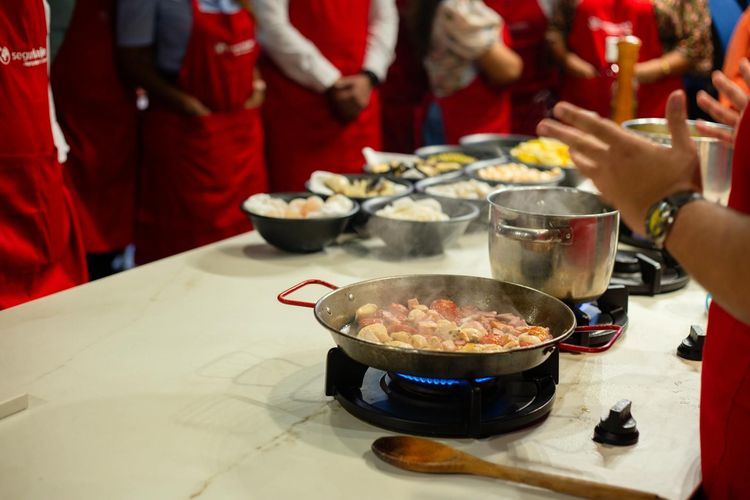







Catering is often the most noticed part of a seminar — and yet the least worked on from an ESG perspective. An engaged chef who adapts menus to sustainability requirements, team dietary needs, and local culture can transform a group meal into a memorable and meaningful experience.
Ready to Create Unforgettable Team Experiences?
Discover how we can help you plan retreats that your teams will truly remember.
The Pillars of Responsible Seminar Catering
🍃 The hidden impact
Catering accounts on average for 15–20 % of the carbon footprint of a residential seminar. But it is also where the most room for improvement exists — and it is the most visible to delegates.
- 🌱 Local and seasonal produce — Reduce food miles, support local producers, display product provenance.
- 🥗 More plant-based menus — Gastronomic plant-based dishes (not just a salad) reduce footprint by 40–60 % vs meat menus.
- ♻️ Zero waste — Calibrated portions, doggy bags, composting, local food charity partnerships.
- 🌾 Allergy management — Clear labelling system, trained staff, separate preparations for special diets.
How to Brief Your Chef for a Responsible Seminar Menu
- 👥 Delegate profile — Number, nationalities, diets, allergies, preferences — collected via form 3–4 weeks in advance.
- 🎯 Nutritional objective — A concentration-heavy seminar needs different menus from an outdoor physical seminar.
- 🌍 Territory and seasons — The chef identifies available local producers according to the season and destination.
- 💰 Budget and perceived value — A £35/person menu can be more memorable and responsible than a £60/person industrial buffet.
5 Ideas for Responsible, Memorable Seminar Menus
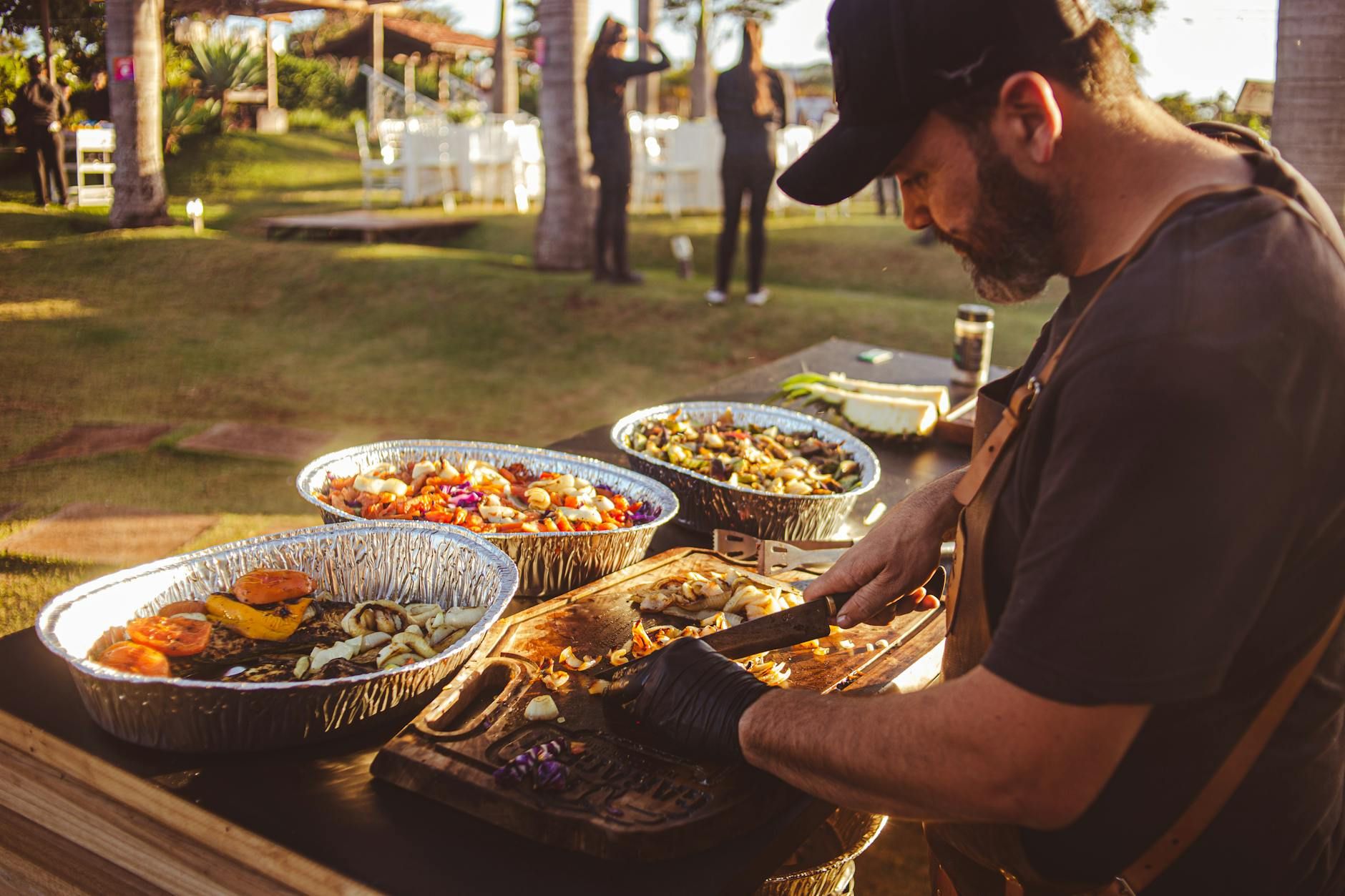
- 🍲 Revisited pot-au-feu — Local market vegetables, homemade stock, optional local meat. Convivial, comforting, local.
- 🥙 Vegetable mezze — Homemade hummus, grilled vegetables, falafel, local cheeses — multicultural and inclusive.
- 🐟 Locally caught fish — On the coast, the catch of the day is often the most responsible and most flavourful choice.
- 🌾 Grain bowl — Quinoa, spelt, lentils, legumes — high nutritional value, low footprint, delicious when well prepared.
- 🍎 Local seasonal dessert — Apple tart from the neighbouring orchard — the territory’s identity on the plate.
❓ Frequently Asked Questions
How do you manage a group with very many dietary restrictions?
Adopt a modular approach: a neutral base dish (pasta, rice, vegetables) + variations for different diets.
Should you display product origin at the buffet?
Yes — and it is a powerful engagement lever. Delegates who know the vegetables came from this morning's local market are more attentive and retain the experience better.
Is responsible catering more expensive?
Not necessarily. Local seasonal produce is often cheaper than imported out-of-season products. The cost difference comes more from preparation time than raw ingredients.
Ready to organize your next retreat?
Discover how we can help you create memorable experiences for your teams.

Create lasting memories with your team in inspiring locations